
Pictures speak a thousand words. And it is pretty easy to see that the unsanctioned trails are very different to the sanctioned trails. The formalised trails are effectively MTB highways; usually wide with sweeping corners, relatively smooth and can be very fast.
The opposite is generally true for the unsanctioned trails which are generally very technical, tight and of a slower speed.
But more than that, the trails themselves are generally lower impact. This was backed up by a recent study titled “Assessing the Environmental Impacts, Condition and Sustainability of Mountain Biking Trails in an Urban National Park” from Griffith University which found that:
- The sanctioned and unsanctioned trails had the same amount of trails in good condition, with unsanctioned with more in poor condition. This is expected given that no maintenance is allowed on the unsanctioned trails.
- Unsanctioned trails were narrower, have less weeds, less vegetation die-off, less overall erosion, less distance to shrubs, more nearby trees and less root exposure.
- It must be said that the change in local biomes will have some impact to the scoring, but the sanctioned trails also had some plusses, with better overall condition, less trail grade and less soil loss. You’d hope they are in good condition given the investment of tax payer dollars and more vital to the trails longevity; the countless volunteer hours of the Nerang Trail Care Alliance (NTCA).
If you consider how little maintenance occurs on the unsanctioned trails, it does indicate how sustainable they actually are. I’ll cover further analysis of the study by Griffith later, but keep those points above in mind when viewing some examples below.
Trail 1 – Unsanctioned – Terminator
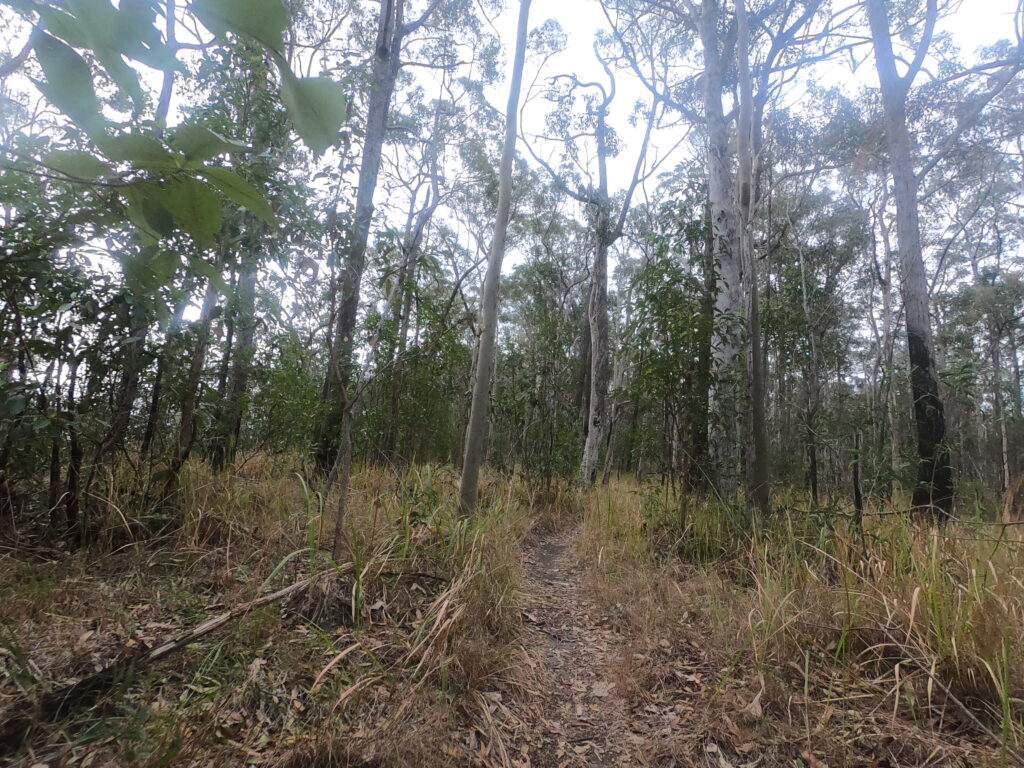
As shown above, like many unsanctioned trails, there is a shallow layer of leaves and plant matter which help keep the trail surface in tact. The trail is barely as wide as a bike and rider. This type of trail is typical for woodland areas.
Trail 2 – Unsanctioned – Catch Me If You Can
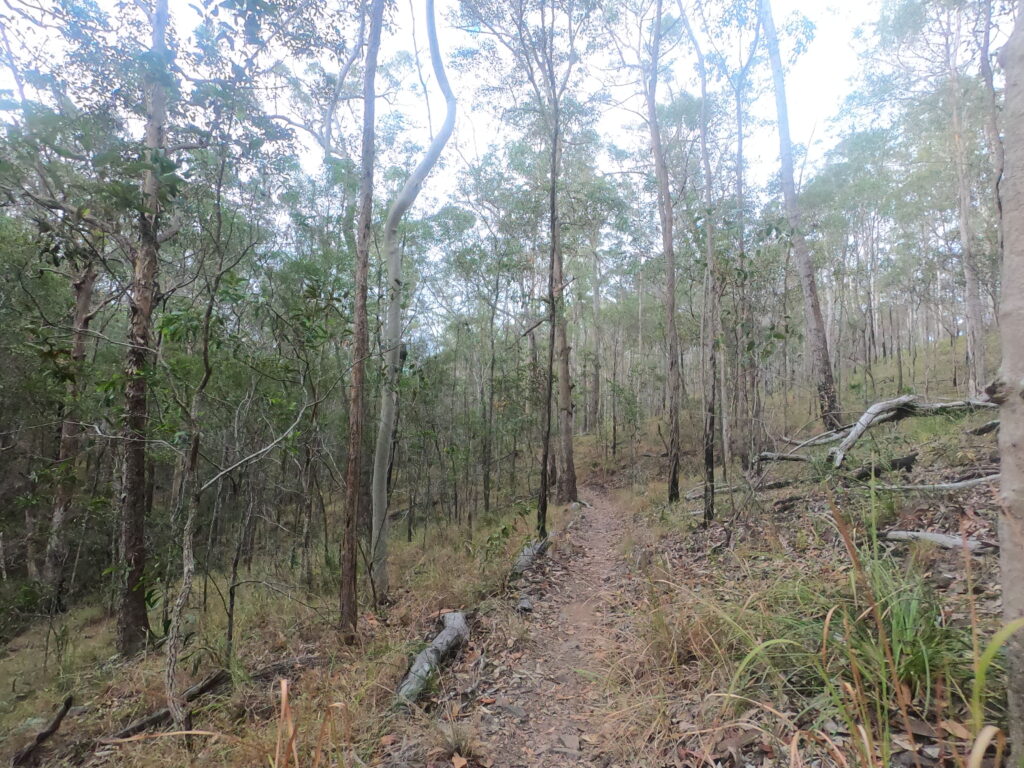
This section of trail, on a slight incline, showing some evidence of “cupping” which is due from leaf build up on the downside edge. The actual level of the trails do not change significantly. Unsanctioned trails would greatly benefit from removal of the downside lip that forms, allowing water to drain off the trail rather than down it. With that said, still in great condition.
Trail 3 – Sanctioned – Happy Valley
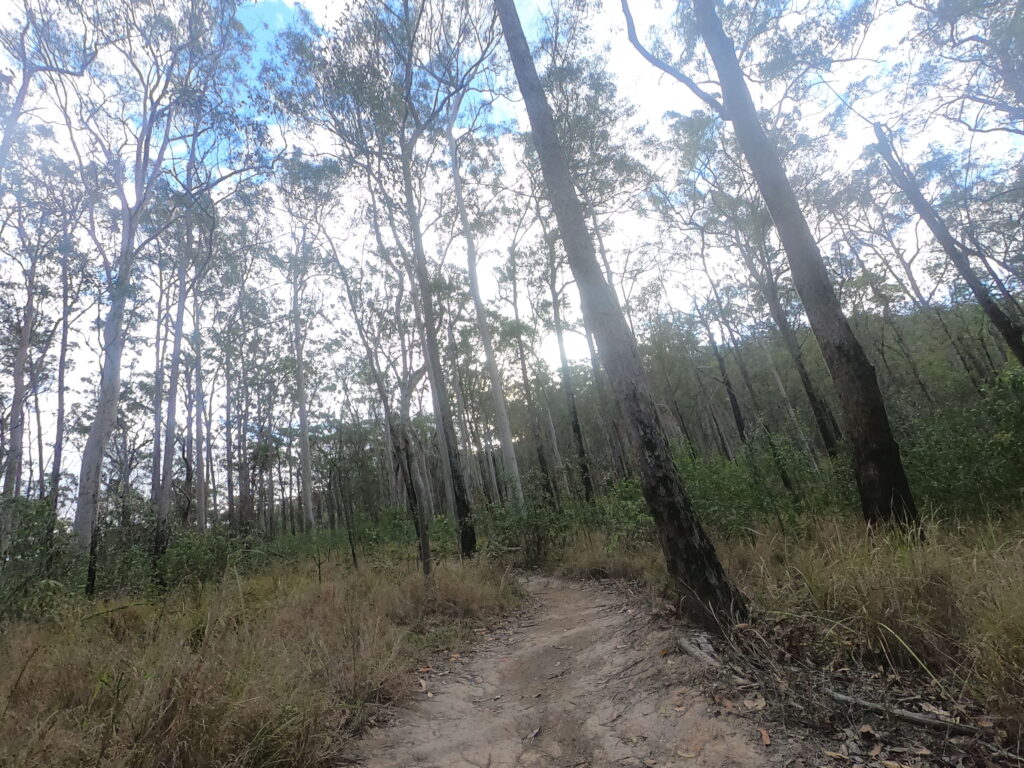
Some of Happy Valley is like Terminator, however majority is like the above photo or worse. The trail widens up significantly in parts as the trail wears and riders seek a more comfortable or faster line.
A common issue is around trees where beginner riders cannot ride over or up ledges / roots. Another issue with the sanctioned trails is the trail tread which is prone to wear /failure due to bike traffic, poor drainage and a wide trail. The wider the trail, the more difficult it is to manage.
Trail 4 – Sanctioned – Pete’s Trail
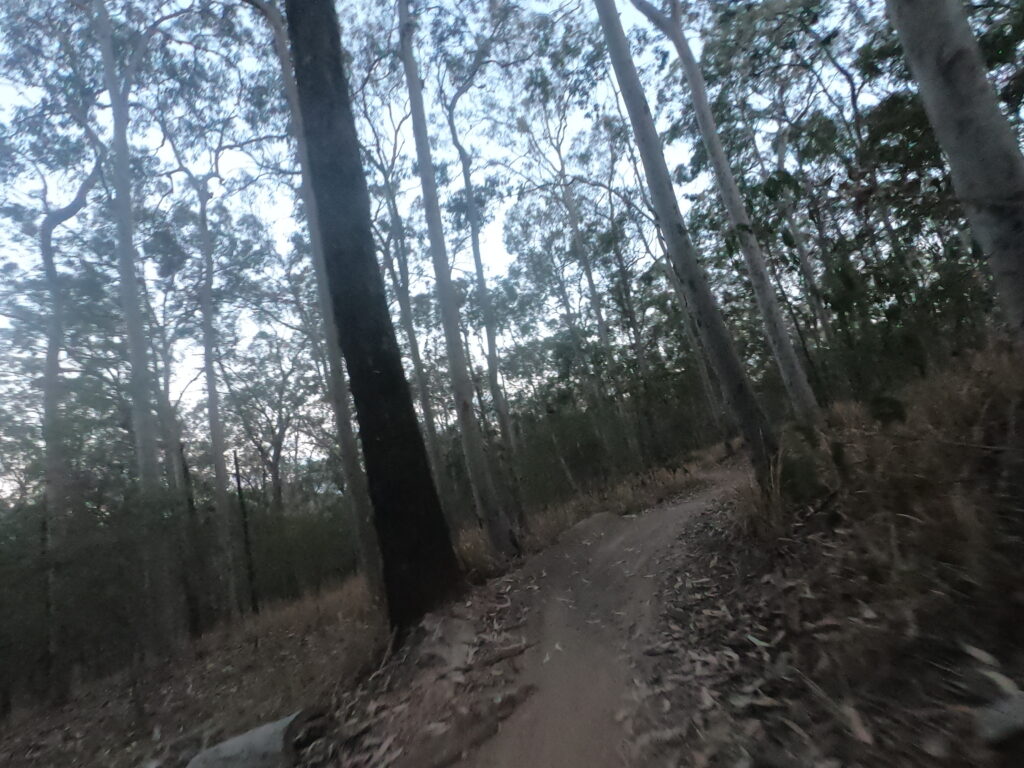
Pete’s trail is perhaps the most well known trail and a popular favourite for all riders. It has probably had the most investment, with some type of refurbishment every several years since 2017. It is also a trail which the local trail care maintains routinely.
The key issues with Pete’s is how it has become so popular, wide and fast that it can only ever last so long. Due to the nature of the soil at Nerang, rocks will pull out of the ground and loosen the trail up. The substantial rainfall over the summer periods also causes significant damage, especially as man-made drainage fails.
Conclusion
The research and photographic evidence show a clear difference in the sanctioned and unsanctioned trails. Both sets of trails have proportionally small sections of very poor trail condition, however that is not indicative of the entire network. As mentioned earlier, the unsanctioned trails hold up exceptionally well given that QPWS (the land manager) does not allow or conduct any maintenance to them.
Leave a Reply